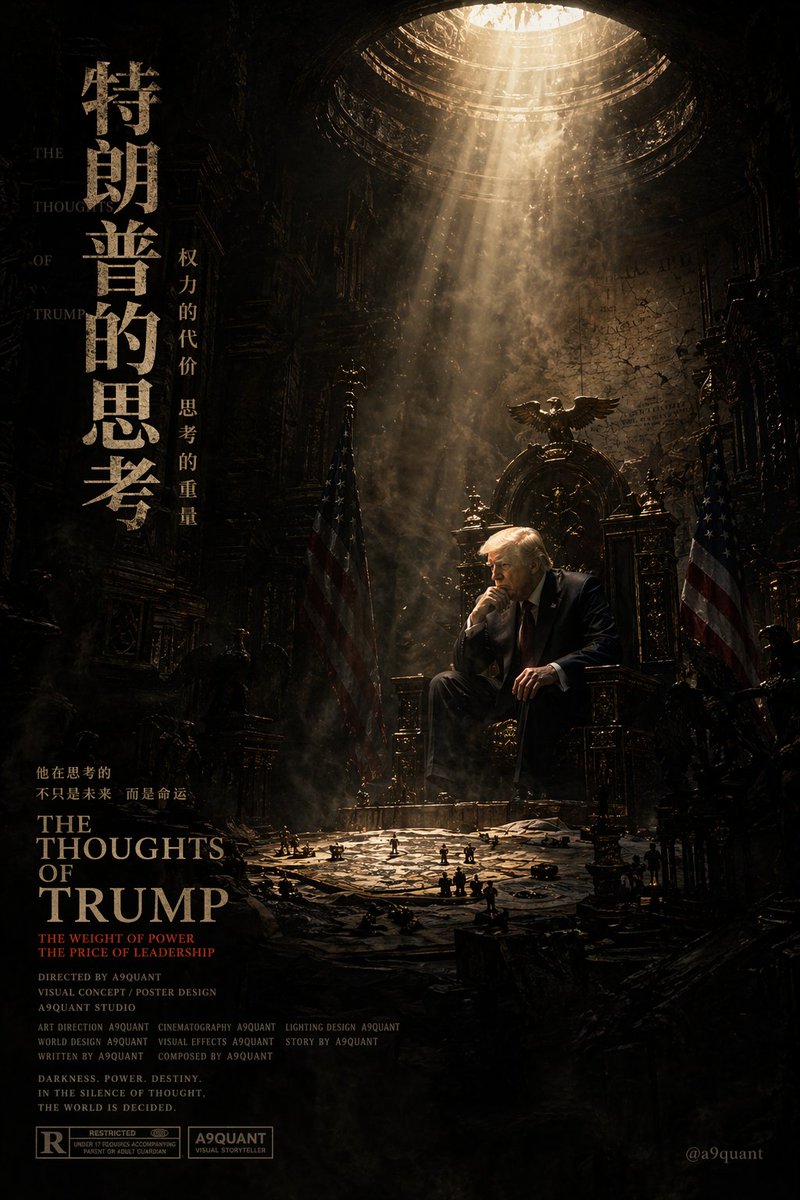
Dark Epic Concept Poster
Source
A9QuantPrompt
Automatically generate a top-tier dark epic concept poster / cinematic infographic poster centered around the [Theme]. The only variable you need to input is: [Theme]:___Reflections of Trump____ Apart from the [Theme], everything else will be automatically adapted by the AI, including but not limited to: - Core Subject (automatically determines if it's more suitable for a character, guardian, warrior, product, artifact, statue, abstract symbol, or other main visual object) - Central Bearing Structure (automatically determines if it's more suitable for a throne, stone seat, altar, mechanical base, ruins, high platform, or other support structure) - Environmental Space (automatically determines if it's more suitable for a cave, temple, ruins, abyss, underground palace, secret chamber, or other enclosed epic space) - Top Opening and Light Source Form (automatically determines if it's more suitable for moonlight, divine light, energy beam, light of judgment, holy light, or other single strong light source) - Symbolic Elements (automatically determines if it's more suitable for skulls, emblems, crumbling steles, heraldry, runes, energy rings, divine symbols, etc.) - Color System - Material Composition - Titles, Subtitles, Auxiliary Copy - Layout and Overall Narrative Tone [Overall Style] High-budget 90s Hollywood epic blockbuster poster aesthetic, integrating cinematic matte painting, hyperrealistic photographic texture, extreme contrast, rich spatial narration, dark heroism, and ritualistic composition. The overall image must resemble a genuine movie main poster, not an ordinary illustration or e-commerce image. [Core Structure Lock] The entire poster must retain the following structural DNA: 1. A massive, overwhelmingly dark and enclosed space. 2. A strong, volumetric light beam cutting diagonally from above, serving as the primary visual order of the image. 3. The core subject and bearing structure positioned centrally to the right or at the endpoint of the light beam. 4. The bottom left corner serving as a high-density title and information anchor point. 5. Ample pure black or near-black negative space around the edges, forming a cinematic breathing room. [Automatic Adaptation Rules] The AI must automatically deduce the most suitable visual system based on the [Theme]: - If the [Theme] leans towards dark hero, revenge, justice, loneliness, or destiny, it will automatically lean towards a stone throne, solitary figure, cold divine light, and ruin or cave-like spaces. - If the [Theme] leans towards mystery, ghosts, stealth, phantom, or nocturnal, it will automatically lean towards moonlight, mist, cold blue volumetric light, and abyssal dark spaces. - If the [Theme] leans towards power, domination, royalty, or order, it will automatically enhance the expression of throne / altar / crown-like symbol / ritual space. - If the [Theme] leans towards technology, AI, future, or machinery, it will automatically replace the throne and space with mechanical divine seats, energy bases, metal caverns, industrial temples, and other futuristic forms. - If the [Theme] leans towards product, brand, or artifact, it will automatically replace the core subject with the most suitable hero object, while maintaining the epic composition highlighted by a divine, judgment-like light. [Canvas and Color System] - The background layer must be an extremely deep, almost all-consuming dark space. - The main environmental color will be automatically determined by the AI based on the [Theme], but the overall palette must be restrained, primarily dark. - Colors in the strong light areas must be highly concentrated, serving only the volumetric light and main subject highlights. - Theme colors / accent colors can only be concentrated on the main visual core; they are not allowed to spread throughout the entire image. - A clear hierarchical order of "dark base + single main light + a small amount of thematic accent color" must be established. [Composition and Visual Gravity] - Employ strong diagonal tension and visual guidance converging towards the center. - Visual gravity strongly descends from the upper light source, ultimately resting upon the core subject. - The subject must be in a position illuminated by fate, judgment, divinity, or power. - Edges must naturally blend into darkness; no meaningless background filling is allowed. - All elements must serve the single main narrative core. [Materials and Lighting] - No outlines, no flat linework. - Entirely relies on volumetric light, shadow cutting, reflections, highlights, mist, dust, wet rock, or other real materials to construct the image. - Materials must form a clear contrast, for example: Rough rock / cold hard metal / flexible fabric / ancient stone carvings / wet surfaces / dusty light beams. - Light beams must exhibit a strong Tyndall effect, appearing real, weighty, and perceptibly dense in volume. [Layout System] - Overall 80% visual, 20% text. - AI automatically generates the main title, subtitle, and bottom information block based on the [Theme]. - The main title should be concise, powerful, and have a movie poster feel. - If the theme is more suitable for Chinese, Chinese will be prioritized; if more suitable for English, English will be automatic; bilingual is also possible but must be consistent. - The main title can be arranged vertically along the light beam, as if composed of light itself. - The bottom left corner will feature a high-density information module, including subtitle, small text information, movie credits-style placeholder text, or brand description. - Text must be sharp, clean, and genuinely embedded in the environment, not appearing cheaply floating. [Module Structure — Must strictly maintain 3 blocks] [MOD 1: TOP-TO-CENTER BEAM] A massive volumetric light column cutting diagonally from the top opening, serving as the first visual channel and carrying the main title or main visual text. [MOD 2: CENTER-RIGHT CORE] The core subject and bearing structure located at the endpoint of the light beam, forming the power center / destiny center / narrative center of the entire poster. [MOD 3: BOTTOM-LEFT TEXT] A high-density layout area in the bottom-left negative space, containing the subtitle, explanatory text, credits-style information block, brand information, or event information. [Author Signature] Naturally add the author's signature in the bottom corner: @a9quant The signature should be small and clear, refined, restrained, and high-end, not overshadowing the main content, like a formal movie concept poster or an art piece's inscription. [Output Requirements] Output a single, unified composition poster. All visual systems must be internally consistent, with no style contamination. The image must possess: darkness, epic scale, oppression, ritual, fate, and cinematic completeness. Maximum detail density, ultra-clear, cinematic grade, print grade, high-end finished product texture.